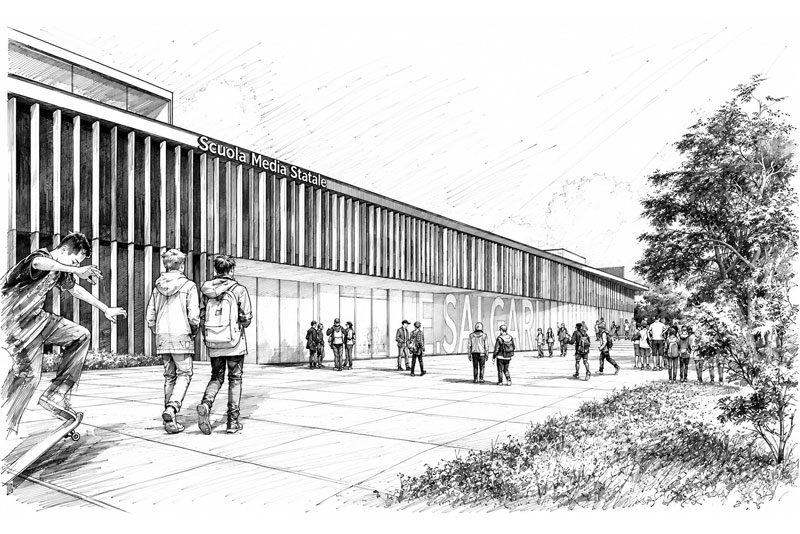
Middle School
Schools play a fundamental role in shaping not only knowledge but also identity, confidence, and social development. For adolescents in particular, educational environments become places where autonomy is gradually constructed through exploration, learning, and interaction with others. This project originated from the desire to translate these developmental processes into architectural form.
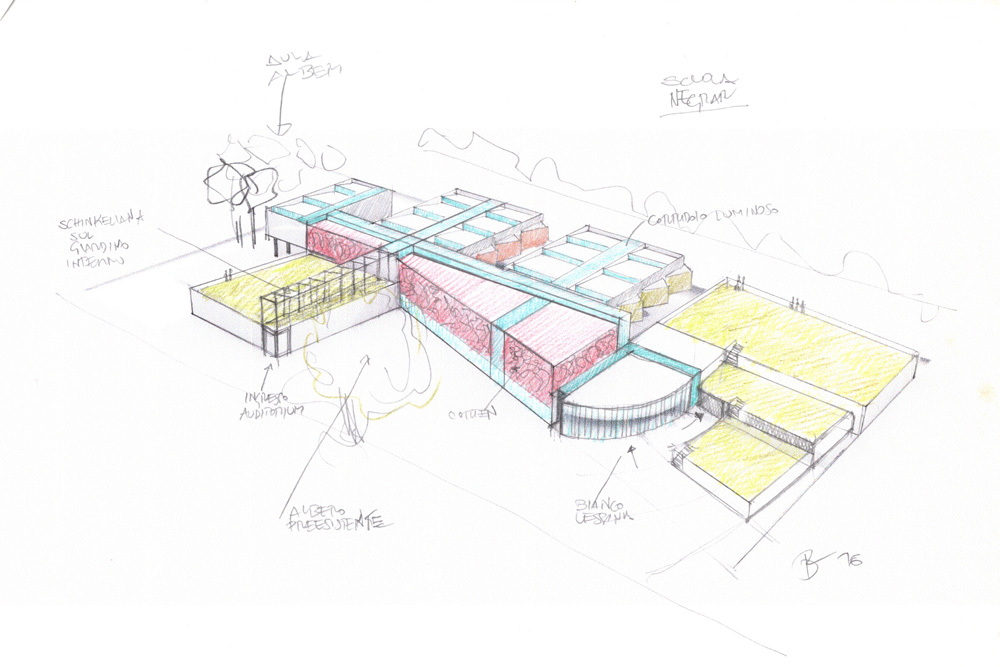
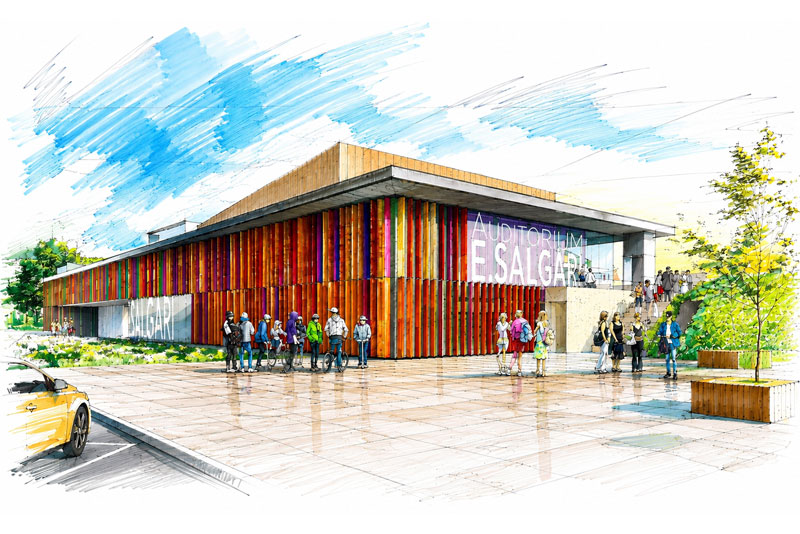
The concept was built around the themes of growth and lightness, interpreting education as a journey rather than a static condition. Drawing on neuroscience and environmental psychology, the design explored how spatial environments influence curiosity, motivation, attention, and social behaviour. The project investigated how architecture can support different modes of learning while creating a sense of belonging and engagement among students.
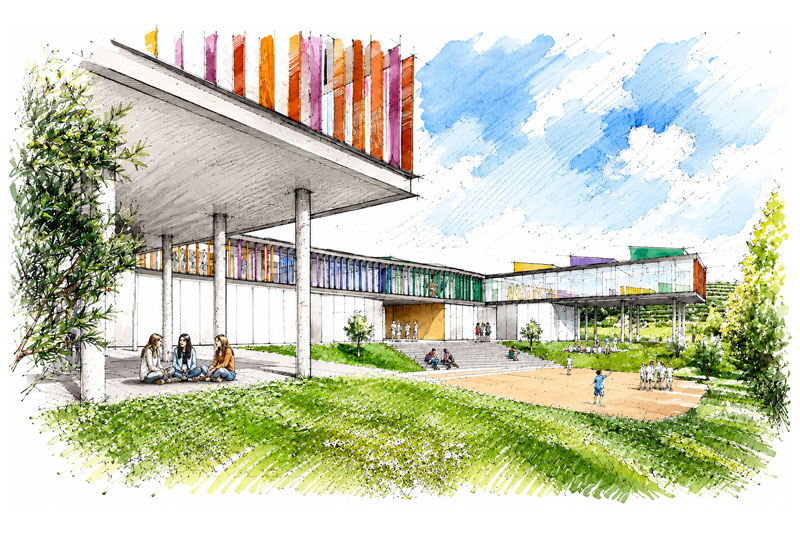
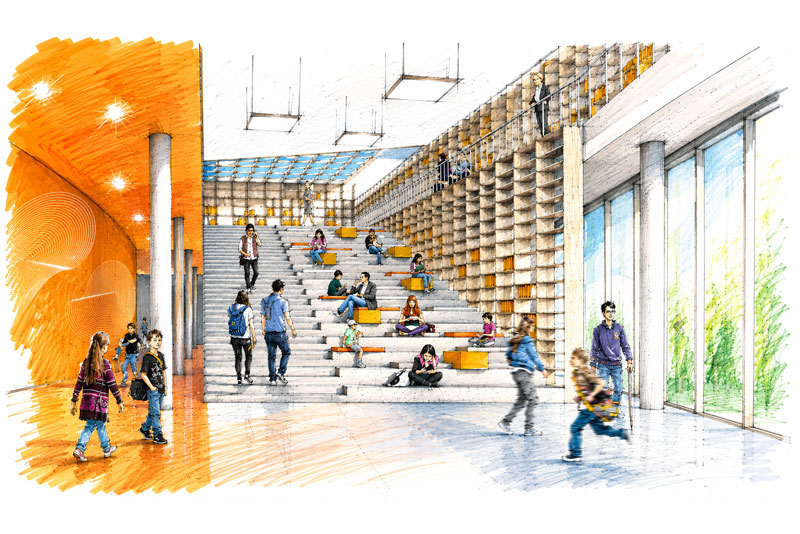
Particular attention was devoted to circulation areas, communal spaces, and informal learning environments, recognising that education often occurs beyond the classroom itself. Natural light, visual connections, environmental legibility, and spatial diversity were used as tools to support orientation and stimulate exploration. The design sought to create an atmosphere that is both reassuring and inspiring, capable of accommodating the changing needs of young people as they grow.
The resulting proposal demonstrates how educational architecture can become an active participant in the learning process, supporting cognitive development, social interaction, and emotional wellbeing through carefully designed spatial experiences.
Works List
Year: 2016
Location: Negrar, Verona
Service: Brief and design
Size: 6.000 mq