Garibaldi Train Station
Transportation hubs are more than infrastructures for movement. They are places where people arrive, wait, make decisions, meet others, and form impressions of the city around them. The experience of navigating a railway station depends not only on efficiency but also on the ability of the environment to support orientation, reduce uncertainty, and create meaningful relationships between movement and place.
This project explored the spatial experience of Milan Garibaldi Station and its surrounding urban context, investigating how travellers perceive and navigate one of the city’s most important transportation nodes. The study focused on the relationship between passenger behaviour, environmental legibility, and public space, recognising that orientation emerges from a combination of perception, memory, visibility, and spatial structure.
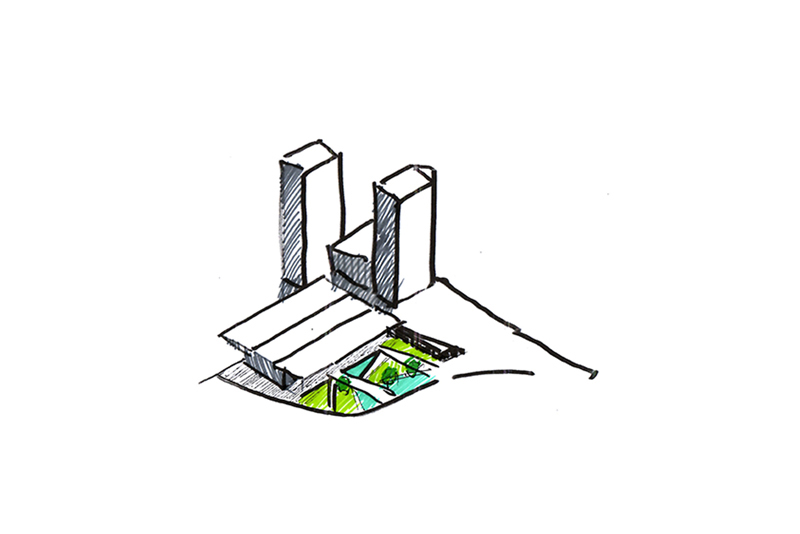
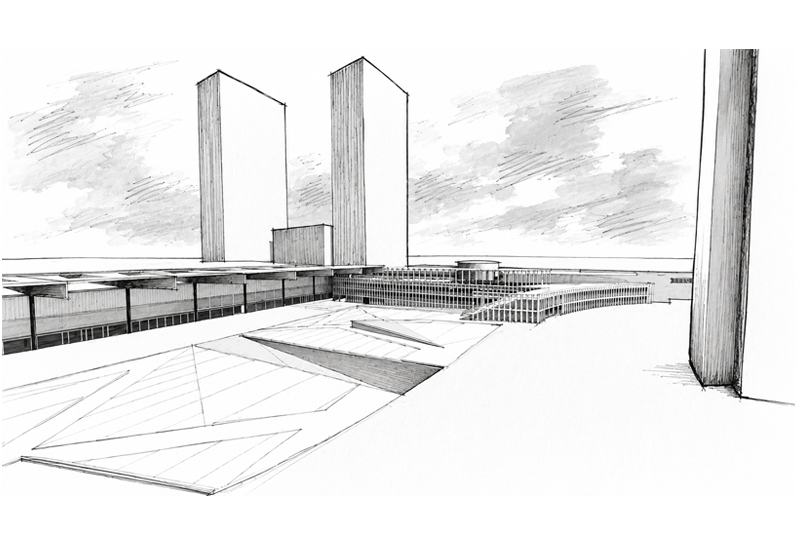
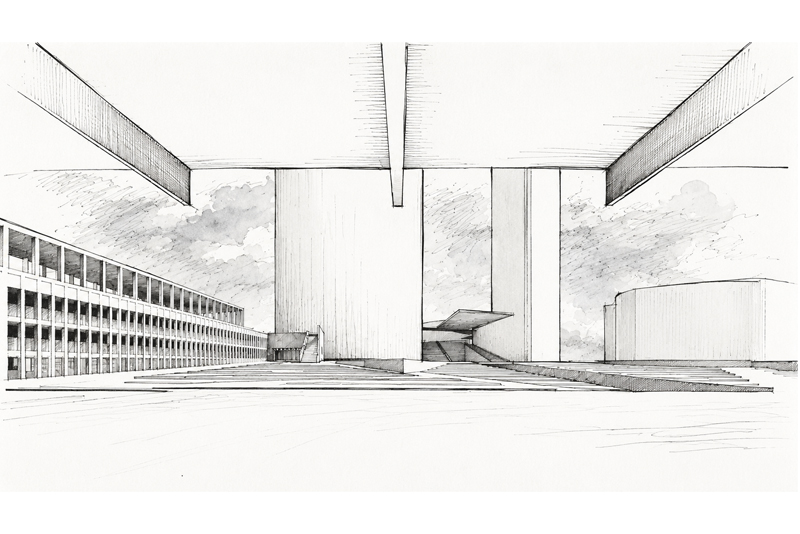
Particular attention was devoted to movement patterns, decision points, visual connections, and the continuity between the station and the surrounding city. The project examined how environmental cues can facilitate navigation while reducing cognitive effort and improving the overall quality of the journey. Alongside the analysis of passenger flows, the proposal explored the creation of a new public square intended to strengthen the station’s role as an urban destination rather than simply a transit facility.
The resulting framework demonstrates how neuroscience and environmental psychology can contribute to transportation environments that are easier to understand, more comfortable to navigate, and better integrated into the everyday life of the city.
Works List
Year: 2018
Location: Milan
Service: Neuro Brief
Client: Lombardini22
Status: Completed
Size: 2.500 mq